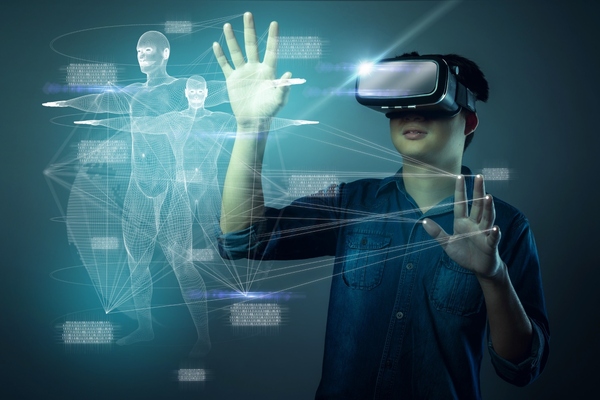






Frost & Sullivan’s analysis predicts that virtual and augmented reality technologies will be empowered through 5G for public sector applications such as disaster preparedness and personnel training.

The continued development of the virtual reality (VR) and augmented reality (AR) across sectors including the smart city industry will increase significantly with the growth in global 5G deployments, a new study finds.
Frost & Sullivan’s analysis, Empowering the Future of VR/AR Content Consumption through 5G, covers seven virtual reality (VR)/augmented reality (AR) application areas and their use cases.
The market overview includes public sector, automotive, the education and training industries, manufacturing/engineering and robotics, healthcare, retail and hospitality, and gaming and entertainment.
“Although the adoption of VR/AR technology outside gaming and entertainment is still in its infancy, immediate work needs to be done to establish the use cases and vision for VR/AR and develop solutions to disrupt the predicted spaces,” said Melody Siefken, information and communication technologies research analyst.
“Countries at the forefront of 5G deployments are the US, South Korea and China, with other countries catching up with either mobile or fixed wireless access to 5G.”
“There is an optimistic push for 5G deployments to cater to the rising demand for bandwidth and the need for faster networking speed”
Frost & Sullivan notes market participants should focus on the following five industries to capitalise on ‘immense’ growth prospects:
“The need for VR/AR technology to alleviate challenges posed by the global pandemic is immediate but constrained by infrastructure issues such as lack of 5G networks and capable devices,” Siefken added.
“There is an optimistic push for 5G deployments to cater to the rising demand for bandwidth and the need for faster networking speed. With the Covid-19 crisis, there has been a slowdown in the supply chain that could delay 5G deployments, which could ultimately impact the use cases of AR/VR.”
You might also like:
Why not try these links to see what our SmartCitiesWorld AI can tell you.
(Please note this is an experimental service)
How can 5G enhance VR/AR applications in smart city emergency management?What are the key benefits of VR/AR for remote education and training?In what ways does 5G improve VR-based automotive test-driving experiences?How does VR/AR integration support healthcare training and virtual therapy?Which manufacturing processes benefit most from VR/AR combined with 5G?