






 22-26 June 2026: Find out more

BUILD YOUR OWN
RESOURCE LIBRARY



Podcasts
Cities Thriving on Lighting, Episode 2 – Simplicity by design in smart lightingSponsored by Paradox Engineering
Cities Thriving on Lighting, Episode 1 – Lighting as the backbone of the smart citySponsored by Paradox Engineering
Opinions

Transforming indoor public safety with smart sensor networksSponsored by Motorola Solutions
Boston makes urban tree data available on open data hub
It builds upon completion of the street tree inventory and efforts to inventory trees in parks, providing critical information on Boston’s urban tree canopy.


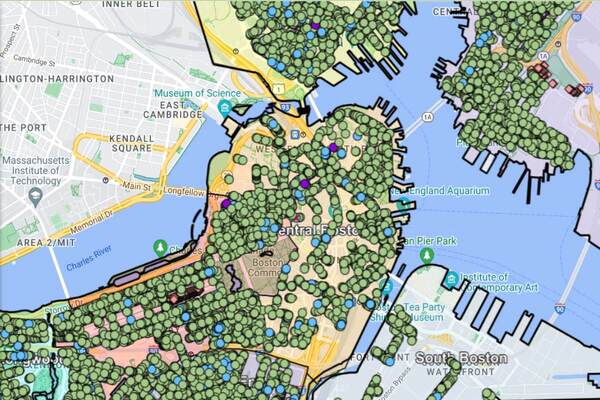
Boston Parks and Recreation Department and Urban Forestry Division are making urban tree data available on the Analyse Boston open data hub.
Building upon the completion of the street tree inventory in 2021 and ongoing efforts to inventory trees in parks, both street and park datasets are now accessible and downloadable through the data hub.
Urban forest analytics
The inventories will continue to be available in an interactive format via an external link to the tree inventory software from the City’s Urban Forest page. This integration into Analyse Boston consolidates valuable urban forestry information alongside other city datasets for research or analytic purposes.
The street tree and public tree inventories provide essential details and offer critical information on the species, size, location and even ecological benefits of trees, aiding in urban forestry planning and management.
Updated daily, the inventory reflects the ongoing work of Urban Forestry Division staff, who plant, prune, and remove trees citywide as part of a comprehensive tree care plan, offering a real-time snapshot of the urban forest’s composition.
“The signing of the public tree protection ordinance is a testament to our shared goal of building a city that prioritises environmental stewardship and community wellbeing”
Improved public access to inventory data not only fosters transparency but also encourages community involvement in the preservation and maintenance of the urban tree canopy, promoting the health and vitality of the city’s green spaces.
This initiative aligns with Urban Forest Plan (UFP) recommendations advocating for enhanced public access to inventory data and the systematic collection of information on park trees. The plan is designed to be a manual for how the Boston community can work together to prioritise, preserve, and grow our tree canopy.
Read More
In January, mayor Michelle Wu signed a public tree protection ordinance on a key recommendation stemming from the City’s Urban Forest Plan. A tree protection ordinance is a critical action item in preserving existing canopy cover and underscores the Boston’s dedication to environmental justice, public health, and community resiliency.
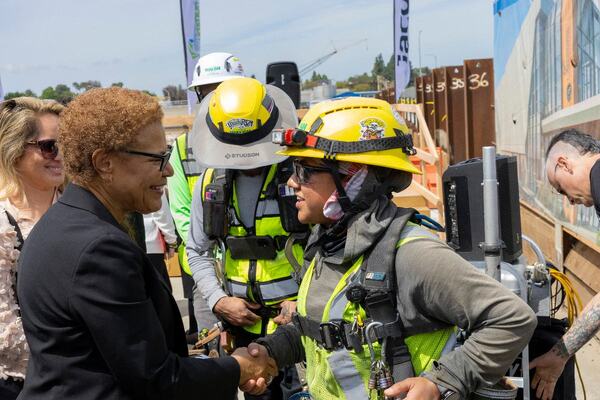
“The signing of the public tree protection ordinance is a testament to our shared goal of building a city that prioritises environmental stewardship and community wellbeing,” said Wu. “In taking this step, we’re not only preserving our urban forest but also shaping a brighter, more sustainable future for all residents.”
Boston’s urban forest is made up of all the trees on public and private land in Boston, along with the City’s shrubs, grasses, ground cover, soil, and waterways. As well as being an important part of the City’s landscape, it provides the following benefits
- provide intergenerational ties to nature and neighbourhoods
- play an important role in cultural and spiritual practices
- improve mental health
- provide essential wildlife habitat
- reduce heat and adverse health impacts of extreme heat
- reduce flooding due to excess rainfall (stormwater)
- can improve water quality
- help reduce air pollution
- help communities save money via reduced energy costs
- can help lower carbon levels in the atmosphere to some extent, and promote walkable, bikeable communities.
Why not try these links to see what our SmartCitiesWorld AI can tell you.
(Please note this is an experimental service)
How does Boston's tree inventory improve urban forestry planning and management?What ecological benefits are tracked in Boston’s urban tree data?How does the public tree protection ordinance support environmental justice?In what ways does urban tree data promote community involvement?How does Boston’s urban forest help reduce heat and improve air quality?
Latest City Profile
Latest Urban Exchange Podcast
Latest Special Report
SmartCitiesWorld Newsletters (Daily/Weekly)
You may also like these related articles...
BECOME A MEMBER
© 2026 SmartCitiesWorld
Smart Cities World Ltd, 37 Lombard Street, London, EC3V 9BQ