




BUILD YOUR OWN
RESOURCE LIBRARY



China raises the percentage of permanent urban residents
The country will move faster to grant permanent urban residency to people who move from rural areas to cities where the industries are more developed to accelerate economic progress.


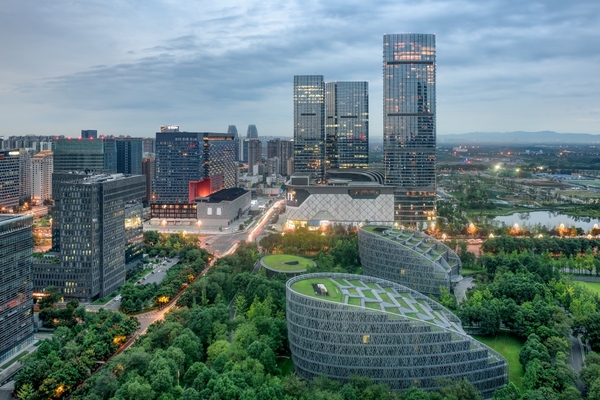
Chengdu district is one of the areas where growth will be spurred on by the plans
China has unveiled detailed plans to raise the numbers of permanent urban residents to two thirds of the population by 2025, up from three-fifths in 2020, alongside addressing pollution and better designing urban spaces.
The government work report delivered at this year’s session of the National People’s Congress (NPC), China’s top legislature, stated that China will move faster to grant permanent urban residency to people moving to cities from rural areas.
Increased urbanisation
According to Yao Yang, dean of the National School of Development at Peking University, where population is flowing from rural to urban areas, and where industries are more developed, economic progress is accelerating. Yang added that over the past decades, 14 per cent of the economic growth can be attributed to increased urbanisation.
China’s National Development and Reform Commission (NDRC) reported, earlier this year, that the target set in 2014 of turning 100 million people from rural areas into urban residents by 2020 had been accomplished.
Cities with populations of fewer than three million had removed barriers for rural residents to apply for urban household registration, which gives them greater access to local public services. Most of the larger cities also eased restrictions for incoming groups including migrant workers with stable jobs and college students from rural areas.
“China needs to build more cities with international competitiveness. Its development has relied on a few major cities for a long time”
The 14th Five-Year Plan (2021-25) and long-range objectives through 2035 to be adopted at this year’s NPC session will outline new goals for urban growth.
The proposed document notes the growth of major metropolitan areas and city clusters, especially the Chengdu-Chongqing economic circle in southwest China, will be spurred on. Regional development gaps will be narrowed by providing support for the north eastern, central and western regions and improving the transfer payment system, which ensures transfer of funds from central government to local governments. Major cities and city clusters will play a greater role in empowering their neighbouring regions.
Many city clusters have already seen mushrooming development and population. Hu Zucai, deputy head of the NDRC, reckons the urbanisation drive has created 19 city clusters, where more than three-quarters of the entire urban population live. These clusters contribute more than four-fifths of GDP.
The five-year plan also envisions addressing pollution, better designing urban spaces, protecting historical heritage, and renovating old communities. Water and sewage systems in urban areas will be improved. Risk control will be enhanced, the housing market reined in, and the urban household registration system eased further.
Growth of smart cities is envisioned through use of new technologies including 5G and artificial intelligence, which will improve physical infrastructure and the digital platforms for urban management
The work report notes that to make cities really home to rural migrants, public education and housing have to be improved. The group should also be given skills training for industries with a high labour demand, such as smart manufacturing and household services, to improve their income and purchasing power.
“China needs to build more cities with international competitiveness. Its development has relied on a few major cities for a long time,” Yin Zhi, a researcher with the Institute for China Sustainable Urbanisation, Tsinghua University,
“It led to traffic congestion, high housing prices and pollution in large cities, leaving many small and medium-sized cities insufficiently developed.”
Hu Zucai’s proposal therefore is to develop county-level economies and improve inter-city transportation. Growth of smart cities is envisioned through use of new technologies including 5G and artificial intelligence, which will improve physical infrastructure and the digital platforms for urban management.
You might also like:
Why not try these links to see what our SmartCitiesWorld AI can tell you.
(Please note this is an experimental service)
How will easing urban household registration impact rural migrants' access to services?What role will 5G and AI play in developing smart city infrastructure?How can urbanisation contribute to reducing regional economic development gaps?What strategies will improve public education and housing for new urban residents?How will city clusters enhance economic growth and regional cooperation?5GAI and Machine Learningartificial intelligenceChengdu-ChongqingcongestionFeaturedGDPGovernanceGovernance and CitizengovernmentHOMEhousingNational People’s CongressPeople and SkillsPeople MovePlanningPlatformsPlatformsPopulationSingaporesmart citieswater
Latest City Profile
SmartCitiesWorld Newsletters (Daily/Weekly)
You may also like these related articles...
BECOME A MEMBER
© 2026 SmartCitiesWorld
Smart Cities World Ltd, 27 Clements Lane, London, EC4N 7AE