














 22 - 26 June 2026: Find out more







BUILD YOUR OWN
RESOURCE LIBRARY



Podcasts

Cities Thriving on Lighting, Episode 2 – Simplicity by design in smart lightingSponsored by Paradox Engineering

Cities Thriving on Lighting, Episode 1 – Lighting as the backbone of the smart citySponsored by Paradox Engineering
Opinions

Transforming indoor public safety with smart sensor networksSponsored by Motorola Solutions
Robotic ‘WasteShark’ launched in London
Battery-powered WasteShark can navigate up to 5km of water and collect up to 500kg of plastic and waste per day, without producing any noise or light pollution.


Infused sparkling water brand Aqua-Libra has teamed with autonomous surface vessel developer RanMarine Technology to help remove floating pollution from London’s Canary Wharf.
RanMarine’s WasteShark is a marine robot designed to remove floating waste and collect water quality data from waterways.
Light pollution
The battery-powered WasteShark can navigate up to 5km of water and collect up to 500kg of plastic and pollutants per day, without producing any noise or light pollution as it roams the canals, according to RanMarine. Once waste is collected, it is then recycled to live on again where possible.
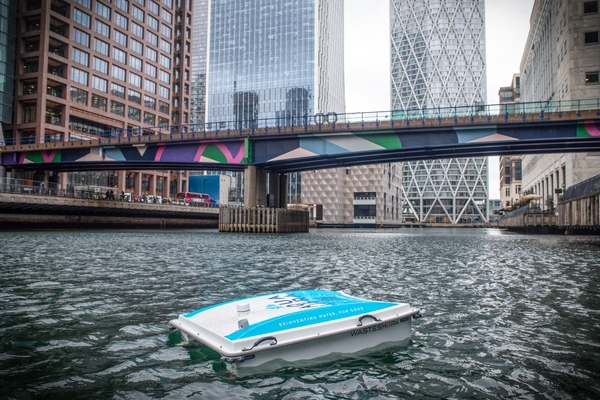
The launch of the Aqua Libra-branded WasteShark into the Middle Dock at Canary Wharf, staged in partnership with property company Canary Wharf Group, is intended to dovetail with Global Recycling Day on 18 March 2023.
WasteShark can navigate up to 5km of water and collect up to 500kg of plastic and pollutants per day, without producing any noise or light pollution
Canary Wharf is a thriving district located on London’s River Thames, with 120,000 people coming to visit, work or shop on the estate every day.
RanMarine Technology specialises in the design and development of industrial autonomous surface vessels (ASVs) for ports, harbours and other marine and water environments.
Read More
RanMarine’s products include the WasteShark range designed and used to clear plastics, bio-waste and other debris from waterways. Data enablement of its products allows customers to closely monitor, in real time, the environment and makeup of their waterways, creating an accurate picture of the water’s DNA to pinpoint any unquantified concerns.
RanMarine products are designed to be used manually via an onshore operator, or autonomously with online control and access.
Canary Wharf Group (CWG) claims it is the developer of the largest urban regeneration project in Europe. CWG develops, manages and owns interests in approximately nine million square feet of mixed-use space and over 1,100 build-to-rent apartments. It claims to have purchased 100 per cent electricity from renewable sources since 2012 and sent zero waste to landfill since 2009.
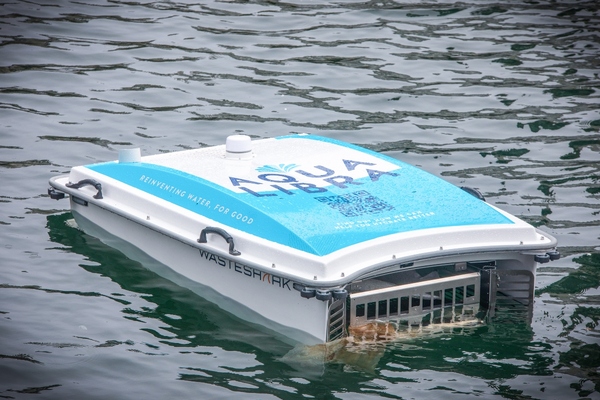
The WasteShark range is designed and used to clear plastics, bio-waste and other debris from waterways
Why not try these links to see what our SmartCitiesWorld AI can tell you.
(Please note this is an experimental service)
How does WasteShark navigate autonomously without producing noise or light pollution?What types of data does WasteShark collect to monitor water quality?How is the collected plastic waste processed and recycled after collection?In what ways does WasteShark contribute to urban waterway environmental management?How does Canary Wharf Group integrate WasteShark into its sustainability initiatives?Canary WharfCanary Wharf Groupconnected and autonomous vehiclesCWGelectric vehiclesEnergy & EnvironmentmobilityRanMarine Technologywaste

Latest City Profile
Latest Urban Exchange Podcast
Latest Special Report
SmartCitiesWorld Newsletters (Daily/Weekly)
You may also like these related articles...
BECOME A MEMBER
© 2026 SmartCitiesWorld
Smart Cities World Ltd, 37 Lombard Street, London, EC3V 9BQ