




 22 - 26 June 2026: Find out more
BUILD YOUR OWN
RESOURCE LIBRARY



Masdar City announces region’s first zero-energy mosque
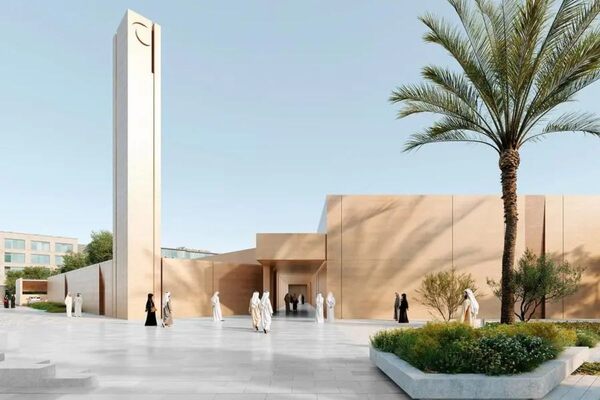
The 2,349 square-metre structure will have capacity for 1,300 worshippers and produce at least 100 per cent of the energy it needs over the course of a year.


Masdar City in Abu Dhabi is aiming to break ground on what it claims will be the region’s first net-zero energy mosque in 2024.
The UAE innovation and sustainability hub aims to set a new industry standard for houses of worship through an innovative design that blends “environmental protection with cultural heritage and community building”.
Solar energy
The 2,349 square-metre structure, with capacity for 1,300 worshippers, will produce at least 100 per cent of the energy it needs over the course of a year using 1,590 m² of on-site solar panels.
The mosque’s total energy requirements were reduced by 35 per cent compared to international baselines using passive design, an architectural approach that responds to environmental conditions.
“The rammed earth provides outstanding insulation, helping to keep hot air out and cool air in while also fostering a sense of place and belonging”
The mosque’s main structure will be made primarily of rammed earth, and a series of tiered windows on the roof will allow the space to be illuminated with cascading natural light patterns. Outdoor colonnades will offer shade from the sun as worshippers transition from the outdoors to the sacred inner space.
“It will be more than a gathering place, a community hub, or a place of worship,” said said Mohamed Al Breiki, the executive director of sustainable development at Masdar City. “It will take people on a cultural, spiritual, and environmental journey, serving as a powerful symbol of our commitment as responsible stewards of the earth. This mosque is our gift to the community.”
Read More
“Touching the earth lightly and helping others do the same is the very heartbeat of Masdar City,” said Lutz Wilgen, Masdar City’s head of design. “Integrating that heartbeat into a mosque was a unique challenge we were honoured to take on. After months of collaboration and consultation, we’ve created a design that seamlessly combines beauty, cultural significance, function, and sustainability.”
“Each design choice is multi-faceted,” added Wilgen. “The rammed earth provides outstanding insulation, helping to keep hot air out and cool air in while also fostering a sense of place and belonging. It’s also cost-effective. A series of tiered, operable windows on the ceiling will help inspire wonder and reverence for worshippers while also creating a natural ventilation system that will make air conditioning optional in the winter months. This holistic approach, integrating environmental, social, and economic sustainability, is the essence of our methodology.”
“Touching the earth lightly and helping others do the same is the very heartbeat of Masdar City”
Masdar City will ensure that at least 70 per cent of construction waste is diverted from landfills and use local and recycled materials wherever possible to reduce both costs and carbon footprint. Low-flow water fixtures, drought-resistant landscaping, and the use of recycled water for irrigation will reduce water use by 55 per cent.
In addition to a Zero-Energy rating from the International Living Future Institute, the building design will target a LEED Platinum rating, the highest international green building certification awarded by the US Green Building Council, as well as Estidama 4-Pearl, the UAE’s highest green building certification. It will also be designed to achieve a WELL Gold rating, which prioritises occupant well-being.
Net-zero energy buildings
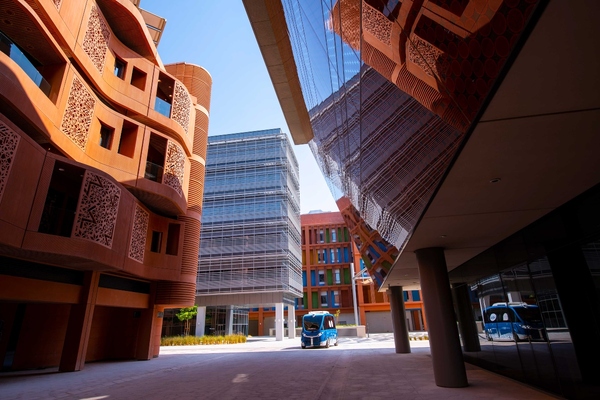
The new mosque is one of several net-zero energy projects in Masdar City. NZ1, the country’s first net-zero energy commercial building, was unveiled in December, while two additional net-zero energy commercial and residential buildings are under construction: Masdar City Square’s HQ building, and The Link’s Co-Lab building, a net-zero energy shared working and living space, will be complete in 2025.
In December, Abu Dhabi’s Department of Energy (DoE) announced its plans to relocate to HQ in late 2025. The HQ building is the focal point of Masdar City Square, a commercial development of seven sustainable buildings that will be completed in 2024.
HQ building will feature a distinctive canopy of 1,033 PV (solar) panels, producing 104 per cent of its annual energy needs, making it net-zero energy. Any excess energy produced will be fed into the Abu Dhabi electric grid.
Why not try these links to see what our SmartCitiesWorld AI can tell you.
(Please note this is an experimental service)
How does rammed earth construction improve insulation in hot climates?What passive design features reduce energy use by 35 percent in buildings?How do on-site solar panels achieve net-zero energy in large structures?What strategies help divert 70 percent of construction waste from landfills?How do LEED Platinum and Estidama 4-Pearl certifications impact building sustainability?climate actionClimate change/ResilienceCultural spaceEnergy & EnvironmentMasdar CityPlanningurban space
Latest City Profile
Latest Urban Exchange Podcast
Latest Special Report
SmartCitiesWorld Newsletters (Daily/Weekly)
You may also like these related articles...
BECOME A MEMBER
© 2026 SmartCitiesWorld
Smart Cities World Ltd, 27 Clements Lane, London, EC4N 7AE