



Jane Burston, CEO, Clean Air Fund and Mark Watts, executive director, C40 Cities, explain that when equipped with the right tools, strong community engagement, and political will, cities can clean the air quickly and ensure their residents reap the benefits.
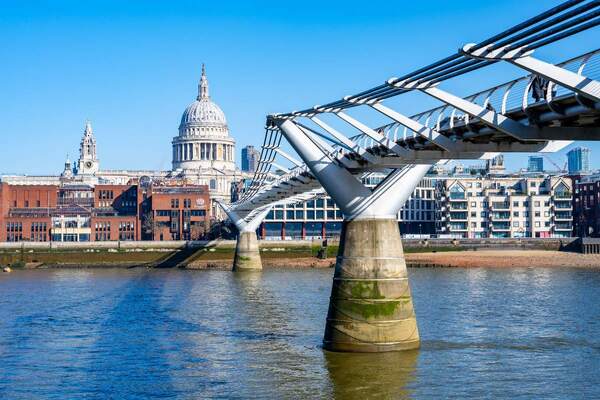
London, a city once defined by its ‘great smog’ and ‘pea soupers’, is now at the forefront of tackling urban air pollution. As the city plays host to London Climate Action Week and marks the two-year anniversary of the global Breathe Cities initiative, the capital has achieved something few would have thought possible just a decade ago: it is now on track to meet UK legal air quality standards – nearly 200 years ahead of previous projections.
This is proof that cities, when equipped with the right tools, strong community engagement, and political will, can clean the air quickly and ensure their residents reap the benefits. London’s turnaround isn’t a fluke – it’s a model that’s now being adapted successfully around the world. A model that shows how deliberate, data-driven strategies can yield fast, measurable wins for health, climate and the economy. In 2016, evidence showed it would take 193 years to bring London’s air pollution within legal limits if the current efforts continued. However, the introduction of transformative policies means London is now close to achieving it this year.
Under mayor Sadiq Khan’s leadership, London has established a robust air quality monitoring network of over 400 sensors at hospitals, schools and cultural institutions. This includes sensors for 60 community groups across 24 boroughs to monitor the air they breathe and advocate for measures to clean it up. The mayor has also successfully created the world’s largest Clean Air Zone (Ulez), Europe’s largest electric bus fleet, and quadrupled the size of its cycle network.
Mayor Khan, in his role as Co-Chair of C40 Cities, took his local success global by launching the Breathe Cities initiative with Michael R Bloomberg – delivered by the Clean Air Fund, C40 Cities and Bloomberg Philanthropies – two years ago at London Climate Action Week. Taking the learnings from London to the world, Breathe Cities has expanded to 14 cities on five continents, home to 77 million people, with the aim of cutting air pollution by 30 per cent by 2030.
Air quality data a compass, enabling city leaders to identify pollution hotspots, to inform life-saving policies
Today, leaders from Rio de Janeiro to Jakarta are tackling air pollution in their city action plans and public health awareness campaigns. They are rolling out clean transport and taking steps to ensure the benefits of clean air are felt by all. Two leading African cities, Accra and Nairobi, have together deployed more than 100 air quality sensors to gather unprecedented real-time air quality data. This data is a compass, enabling city leaders to identify pollution hotspots, to inform life-saving policies. The monitors also empower communities with the information they need to advocate for their own health and well-being.
These examples show the toxic level of air pollution in cities is entirely fixable. Just as clear are the potential health and economic benefits of solving this challenge. Around the world, over 2.6 billion people live in cities that exceed World Health Organisation (Who) guidelines for levels of pollutants, leaving nearly everyone breathing harmful air. Air pollution causes more than eight million premature deaths and the loss of around 1.2 billion workdays a year. It’s estimated that the health impact of air pollution costs $8.1 trillion, almost double the annual GDP of countries like Japan and Germany.
Recent research by the Clean Air Fund showed that reducing air pollution in six of Africa’s largest cities alone could save $20bn. Meanwhile, a Breathe Cities analysis found that if a selection of 63 cities around the world met the Who’s latest Road Map to halve the health impacts from air pollution by 2040, they could collectively avoid 650,000 air pollution-related deaths each year and prevent $1 trillion in annual economic damage.
Conversely, if air pollution in the same cities remained at 2015 levels, it would lead to $2.1 trillion of economic costs each year from air pollution-related deaths by 2040. With 68 per cent of the world’s population expected to live in urban areas by 2050, ambitious clean air action plans for cities are crucial to build new pathways to healthy and sustainable development.
London’s turnaround isn’t a fluke – it’s a model that’s now being adapted successfully around the world
As leaders gather for London Climate Action Week, it’s clear that a global effort to improve air quality has never been more critical to sustaining the kind of economic prosperity that hundreds of millions of people count on to support their families and communities.
Clean air must be a global priority. It’s time to rapidly scale up air quality monitoring, phase out toxic fossil fuel emissions, and deliver the bold, city-led action needed to protect communities and power thriving, resilient urban economies. As the world moves from London Climate Action Week to Cop30 in Brazil, city governments have a powerful opportunity to lead and lay the groundwork for our planet and a more inclusive global economy to thrive.
Jane Burston is the CEO of the Clean Air Fund and previously worked as head of climate and energy science in the UK Government, where she was responsible for the UK greenhouse gas inventory and a £45m science programme. Previously, as head of energy and environment at the National Physical Laboratory, Jane managed a team of 150 scientists working in air quality, greenhouse gas measurement and renewable energy. Jane is a member of the World Economic Forum’s Global Future Council on Clean Air, previously serving as the council’s co-chair for five years. She is also a commissioner of the global Our Common Air commission.
Mark Watts is the executive director of C40 Cities, a global network of nearly 100 mayors of the world’s leading cities united in confronting the climate crisis. Mark has been named one of the world’s most influential leaders driving climate action as a ‘defender’ by Time as part of its inaugural Time100 Climate list. Prior to joining C40 Cities, Mark was a director at pioneering engineering and design firm Arup; and previous to that role, he was a senior adviser to the mayor of London.
Why not try these links to see what our SmartCitiesWorld AI can tell you.
(Please note this is an experimental service)
How has London’s air quality monitoring network improved pollution management?What role does community engagement play in successful urban air quality policies?How can data-driven strategies accelerate air pollution reduction in cities?What economic benefits result from reducing urban air pollution globally?How does the Breathe Cities initiative support international clean air efforts?