




Identifying urban heat islands helps communities take action to reduce the health impacts of heat and provides cooling relief for those in the hottest areas.
The US National Oceanic, Atmospheric Administration (NOAA) has announced that it will map the hottest neighbourhoods in 14 US communities and four international cities this summer.
Identifying these areas, called urban heat islands, helps communities take action to reduce the health impacts of extreme heat and provides cooling relief for those living in the hottest areas.
In partnership with the US Departments of Health and Human Services (HHS) and Housing and Urban Development (Hud), NOAA’s urban heat island mapping campaign seeks to address extreme heat, the number one weather-related cause of death in the US.
Urban heat islands, areas with few trees and more pavement that absorbs heat, can be up to 20 degrees Fahrenheit hotter than nearby neighbourhoods. To map these areas and collect the data necessary to protect disproportionately affected communities, the NOAA Climate Programme Office (CPO), the interagency National Integrated Heat Health Information System (NIHHIS), HHS, Hud and Capa Strategies will work with each of the participating communities.
“It’s exciting to see how communities have used their urban heat maps to strategise placement of trees and shade structures, determine areas in need of more outreach and inform overall city resilience plans”
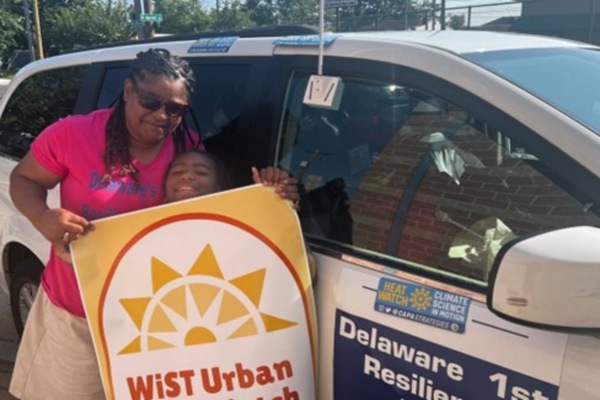
Using heat sensors mounted on their own cars, volunteer community scientists, led by a team of local partners in each city, traverse their neighbourhoods in the morning, afternoon and evening on one of the hottest days of the year. The sensors record temperature, humidity, time and the volunteers’ location every second. Capa’s end-to-end programme, including sensor technology, community engagement, analysis and modelling allows communities to develop hyper-local descriptions of where the hottest parts of their community are and strategise mitigation options specific to each region of the country.
“Hud is pleased to join our federal partners in support of this campaign to map communities throughout the country most impacted by extreme heat,” said Hud acting secretary Adrianne Todman. “This mapping campaign is an important step to understand how extreme heat affects the health, safety and quality of life of our communities. At Hud, this information is critical as we develop programmes to support our core mission of creating strong, sustainable, inclusive communities.”
NOAA, federal and local partners will work with community scientists to map urban heat islands in 14 US communities this summer and in four international cities. Since 2017, NOAA and its science partner, Capa Strategies, have worked with more than 70 communities to create heat island maps that can be used to inform cooling strategies.
“It’s exciting to see how communities have used their urban heat maps to strategise placement of trees and shade structures, determine areas in need of more outreach and inform overall city resilience plans,” said Richard Spinrad, administrator, NOAA. “This year, partnering with Hud and HHS will allow the programme to expand and provide even more resources to communities.”
“This mapping campaign is an important step to understand how extreme heat affects the health, safety and quality of life of our communities”
Communities chosen for the 2024 programme are: Bloomington, Indiana; Calexico, California; Charlotte, North Carolina; Flint, Michigan; Fort Wayne, Indiana; Grand Junction, Colorado; Hennepin and Ramsey Counties, Minnesota; Laredo, Texas; Pierce County, Washington; Reno and Sparks, Nevada; Santa Fe, New Mexico; and Unincorporated Norcross, Georgia.
While the emphasis of the programme is on urban heat island mapping in US cities, a smaller number of international campaigns benefit US communities because they broaden the scope of lessons that can be learned from how other countries tackle extreme heat. They also enable the US to share best practices more broadly.
The international campaigns will take place in Mexicali, Mexico; Dhaka, Bangladesh; Nairobi, Kenya; and Salvador, Brazil. International campaigns were previously completed in Freetown, Sierra Leone, Rio de Janeiro, Brazil, and Santiago, Chile.
Why not try these links to see what our SmartCitiesWorld AI can tell you.
(Please note this is an experimental service)
How do urban heat island maps improve community cooling strategies?What role do volunteer community scientists play in heat mapping?How can tree placement reduce temperatures in urban heat islands?Which data points are collected by sensors during heat mapping?How do international heat mapping campaigns benefit US communities?