





















Latest research from Berg Insight finds cities want digital solutions that deliver tangible outcomes, marking a shift away from tech-led experimentation.
At a glance
Who: Berg Insight.
What: The IoT market research provider has published its latest Smart Cities: Connected Public Spaces report, which shows how smart cities are prioritising ROI and operational savings and service when it comes to implementing digital solutions.
Why: To provide insight and intelligence across the smart city sector, focusing on areas such as smart street lighting, smart parking, smart waste collection, urban air quality monitoring and smart city surveillance.
When: The report includes data from 2024 usage and implementations and includes five-year industry forecasts and expert commentary.
Smart cities are now prioritising a return on investment (ROI) and operational savings and service when it comes to implementing digital solutions, rather than technology experiments, according to latest research.
Internet of Things (IoT) market research provider Berg Insight has released the latest edition of its smart city technology report, which includes in-depth studies of five key technology areas: smart street lighting, smart parking, smart waste collection, urban air quality monitoring and smart city surveillance.
In 2024, the global installed base (excluding China) of individually controlled smart streetlights amounted to 27.9 million units. The corresponding figures for the smart waste and smart parking sensor technology markets were at the same time 1.56 million and 1.47 million units respectively.
Smart parking sensors refers to in-ground or surface-mounted parking occupancy detection sensors while smart waste sensor technology consists of fill-level sensor devices that may either be pre-integrated into bins and containers, for example as a smart bin offering, or retrofitted on existing collection points.
“Overall, the demand for remotely managed infrastructure continues to increase day by day, paving the way for a more sustainable and resilient future for city services”
Smart street lighting deployments, often seen as foundational for smart cities, have gained significant traction and the installed base will grow at a compound annual growth rate (CAGR) of 21.8 per cent to reach 74.5 million units in 2029.
The number of installed smart parking sensors is expected to see a slightly slower growth of 18.4 per cent (CAGR) while the smart waste sensor technology market will be the fastest growing of the three with a CAGR of 22.3 per cent.
Another focus area is non-regulatory urban air quality monitoring, which comprises increasingly small and low-cost air quality monitoring devices that can serve as valuable complements to traditional regulatory monitoring stations.
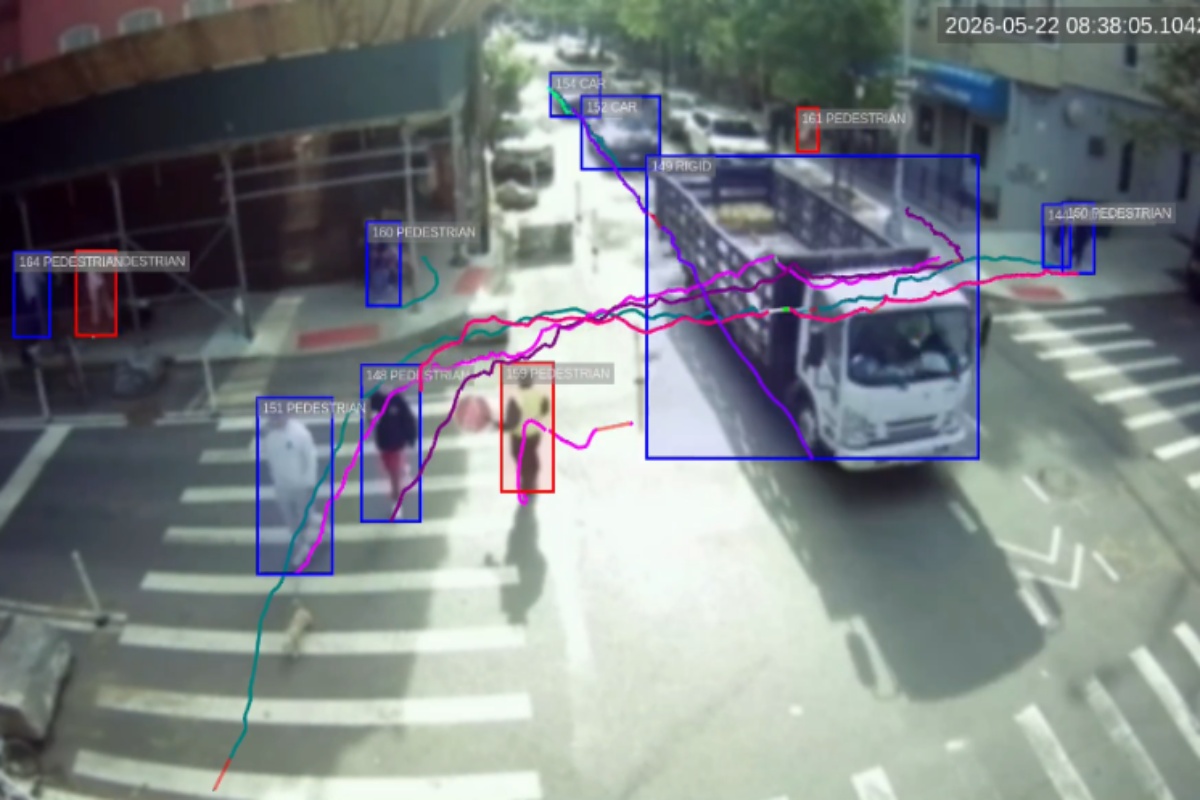
At the end of 2024, the number of such non-regulatory air quality monitoring devices installed in outdoor urban environments amounted to 206,000 units globally and will reach 633,000 units in 2029. The largest of the five covered smart city application areas was the smart city surveillance market, which reached a global market value of €13.6bn in 2024. The market, which includes both fixed and mobile video and audio surveillance solutions, is expected to grow at a CAGR of 15.6 per cent throughout the forecast period.
“Overall, the demand for remotely managed infrastructure continues to increase day by day, paving the way for a more sustainable and resilient future for city services,” said William Ankreus, IoT analyst, Berg Insight.
Outside China, Europe has emerged as the leading smart city technology adopter while North America constitutes the second largest market. The Middle East and Asia-Pacific regions, meanwhile, constitute the fastest growing markets for smart city technology, fuelled by ambitious top-down initiatives and rapid urbanisation.
Berg reports there are good opportunities for growth within all the separate application areas and market conditions are increasingly supportive of large-scale smart city deployments.
Ankreus added: “Cities and municipalities are now prioritising ROI, operational savings and service quality over technology-led experimentation, accelerating the adoption of digital solutions that deliver tangible outcomes.”
Download report brochure: Smart Cities: Connected Public Spaces.