













 22 - 26 June 2026: Find out more




BUILD YOUR OWN
RESOURCE LIBRARY



Opinions

Smart lighting: enabling smart cities beyond illuminationSponsored by Paradox Engineering

How AI and biometrics are shaping next-generation mobility paymentsSponsored by ST Engineering
Five autonomous vehicle projects that can shape a driverless future
SmartCitiesWorld takes a closer look at five innovative autonomous vehicle projects that are helping to usher in the new normal of a driverless future.


Much has been touted about the future of mobility with regards to autonomous vehicles and their place in the make up of a complex ecosystem, from passenger transport to logistics and freight. Pilots and projects have been taking place around the world in cities for several years now, as much to familiarise citizens and passengers with the idea of driverless vehicles as to pilot the technology in real-world scenarios.
The autonomous driving space is one that has many advocates, and more than a few detractors besides, and has received significant funding and policy support in recent years to move from concept to real-world application. The UK Department for Transport’s Centre for Connected and Autonomous Vehicles has run innovation and funding competitions worth tens of millions of pounds over the last six years, while many US DoTs have funded pilots on varying scales, from retirement villages to large-scale visitor hubs, with DoT Secretary Pete Buttigieg saying earlier in 2022 that meaningful policy development on autonomous vehicle is set for the coming years
Here, SmartCitiesWorld takes a look at five active autonomous projects that are helping to shape driverless mobility in their respective cities, and that could lay the foundation for wider rollouts of CAVs.
Motional and Lyft launch robotaxi in Las Vegas
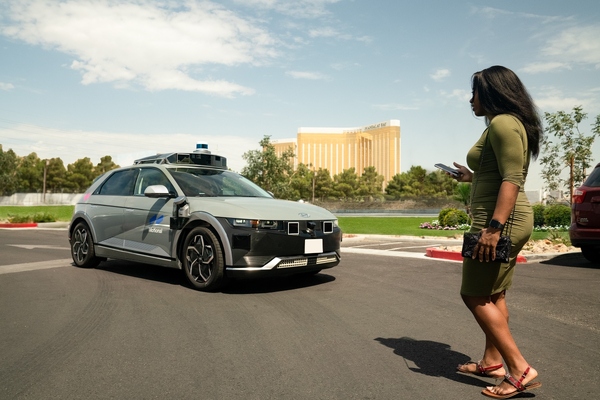
In August 2022, ride-hailing firm Lyft stepped up its partnership with AV experts Motional to rollout a new all-electric Ioniq 5-based robotaxi into Lyft’s Las Vegas network. The vehicle is designed for fully driverless ride-hail operation, and builds on plans for the two firms to launch a fully driverless service in 2023 across several US cities.
The new vehicle rollout brought with it a new custom-designed user experience, enabling riders to more easily control their trip without driver assistance. Motional says this includes the ability to unlock doors through the Lyft app, more easily contact customer services, and provides access to an intuitive in-ride display. The features were added following research and feedback from real-world users of the existing service, and are designed to improve rider comfort and overall ease of use.
Motional and Lyft have been partnered on autonomous rides in Las Vegas since CES 2018 and has helped set the standard for introducing autonomous mobility capabilities into ride-share networks. In the last four years, the autonomous service in Las Vegas has introduced around 100,000 riders to driverless mobility services.
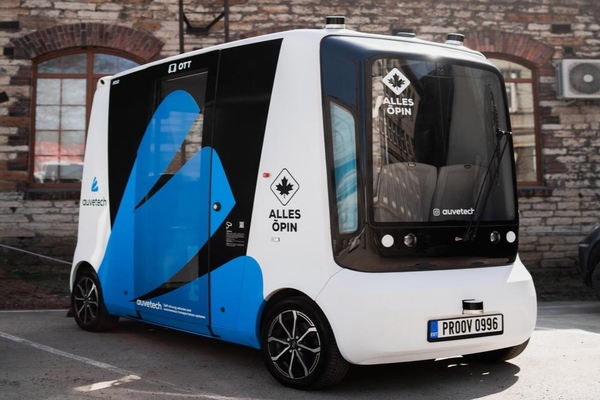
The eight-seater self-driving bus that will operate in Tallinn for a pilot programme
Tallinn launches free, self-driving bus pilot
While Lyft and Motional are piloting commercial CAV services, Estonian capital Tallinn launched a free driverless bus service pilot in July 2022. The bus carries eight people, including a security member of staff, and travels on a pre-mapped 1.8km circuit every 25 minutes between 10am and 4pm between Tuesday and Sunday.
Despite the initial pilot ending on 14 September, city officials are hopeful that success of the pilot will lead to another longer autonomous driving project.
The pilot is being run by the Tallinn Transport Authority and Auve Tech OÜ, and runs through the district of Mustamäe, whose officials say that the compact nature of the district is ideal for the pilot, as it’s possible to cover a significant number of citizens even through a short route.
Autonomous shuttle to launch in Rhine-Main area from 2023
Sticking with Europe, the German cities of Darmstadt and Offenbach in the Rhine-Main area plan to launch an autonomous shuttle service to be completely integrated into regular public transport operations.
The test phase of the autonomous Level 4 vehicles is due to begin in 2023, with Deutcsche Bahn’s digital mobility technology company, Ioki, providing the autonomous driving software, and Intel subsidiary Mobileye also contributing to the technology.
The local transport authority, Rhein-Main-Verkehrsverbund (RMV), says that the service will create more flexibility for passengers and can also help to reduce congestion. The service will be app-based and on-demand. It will be the latest in a string of service rollouts that Ioki has been involved with, and will be followed by further service area rollouts in the districts of Groß-Gerau, Darmstadt-Dieburg and Hanau.
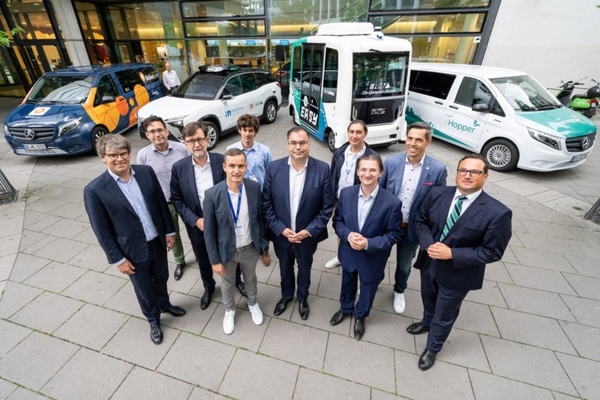
The autonomous shuttle service in the Rhine-Main area will begin operations in 2023
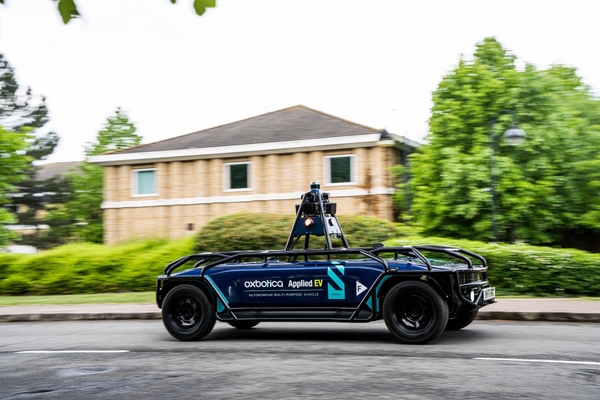
Oxbotica will also accelerate commercial deployment of AVs globally
First zero-occupancy autonomous driving journey in Europe
Autonomous mobility isn’t only useful in passenger-facing services but also logistics, freight and delivery. One such example is the upcoming Ocado Group goods delivery pilot, which will use Oxbotica’s all-electric AppliedEV prototype vehicle.
The vehicle recently underwent its first safe, sustainable, zero-occupancy deployment on public roads in the UK ahead of the Ocado pilot in 2023, following a two-year period of extensive trials to prove its safety case and develop its system architecture.
The vehicle test is part of Oxbotica’s plans to accelerate commercial deployment of autonomous mobility around the world, as it works with partners like ZF, BP and Nevs to enable passenger shuttles and other industry-specific platforms.
Uber Eats pilots autonomous delivery service in Santa Monica
Motional has also been working with Lyft competitor Uber to launch an autonomous delivery service in Santa Monica for customers of the ride-sharing firm’s food delivery business, Uber Eats.
The service constituted a first for both firms at launch, being the first on-road autonomous vehicle pilot for Uber Eats, and Motional’s first foray into the autonomous delivery space. The aim is to provide safer, more cost-effective and reliable deliveries to customers, and set a new standard for the on-demand delivery market.
As with the Lyft Las Vegas project, the service will use Motional’s all-electric Ioniq 5-based vehicles to complete end-to-end deliveries. The vehicles have been adapted to better support delivery services rather than passenger services – part of the Motional team’s efforts to better understand each touchpoint of the commercial delivery chain.
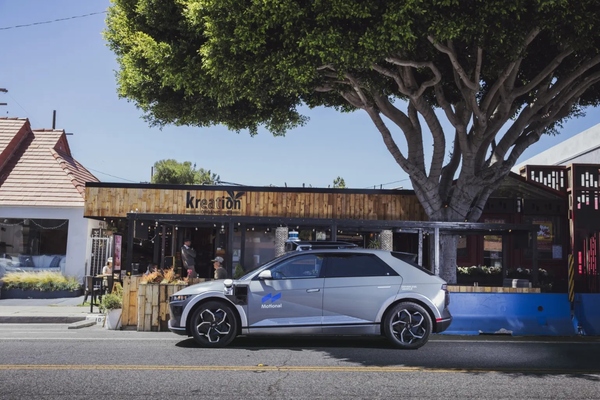
Motional’s all-electric Ioniq 5 vehicles will carry out the end-to-end food deliveries
Why not try these links to see what our SmartCitiesWorld AI can tell you.
(Please note this is an experimental service)
How do autonomous shuttles integrate with existing public transport systems?What safety measures ensure zero-occupancy autonomous vehicle road deployment?How does user experience improve in fully driverless ride-hail services?What benefits do autonomous delivery vehicles bring to food logistics?How can compact urban districts optimize driverless bus pilot routes?
Latest City Profile
Latest Urban Exchange Podcast
Latest Special Report
SmartCitiesWorld Newsletters (Daily/Weekly)
You may also like these related articles...
BECOME A MEMBER
© 2026 SmartCitiesWorld
Smart Cities World Ltd, 27 Clements Lane, London, EC4N 7AE