












BUILD YOUR OWN
RESOURCE LIBRARY



City of London Corporation celebrates climate heroes
Five businesses are recognised for cutting carbon, reducing waste and embracing circular economy, driving real progress on climate action and sustainability.


 At a glance
Who: City of London Corporation.
What: City of London has recognised five businesses making the Square Mile a cleaner and more sustainable place in its Clean City Awards 2026, now in their 32nd year.
Why: The awards align with the City Corporation’s Climate Action Strategy (CAS), which commits the organisation to achieving net zero carbon emissions in its own operations by 2027 and its full value chain by 2040, as well as supporting the whole Square Mile to reach net zero by 2040.
Where: Companies recognised are located across the Square Mile.
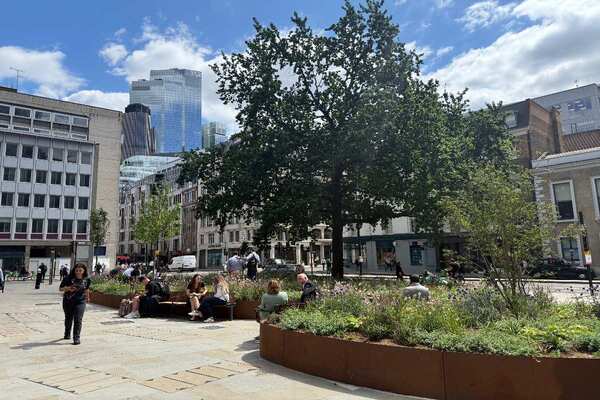
The City of London Corporation has recognised five businesses making the Square Mile a cleaner and more sustainable place in its Clean City Awards 2026.
Celebrating its 32nd consecutive year, the awards bring together dozens of business leaders with a shared passion for improving sustainability and championing environmental progress for a healthier, more sustainable future.
Reducing carbon emissions
The Clean City Awards 2026 awards focus on areas such as air quality, climate action, resource efficiency, circular economy practices, and reducing plastic waste.
Its latest progress report shows that carbon emissions across the Square Mile have fallen by 24 per cent between 2017 and 2022, the equivalent of powering 81,000 homes for a year. Meanwhile net emissions across everything the City Corporation does, including its supply chain, have reduced by 28 per cent since 2018, equivalent to powering 50,000 homes for a year.
The 2026 award winners and categories are:
Air Quality & Climate Action: Nomura International plc. Awarded for transforming their roof to a thriving bio-solar green space that supports biodiversity, improves air quality and helps regulate building temperatures.
Communications & Engagement: 2 London Wall Place. Awarded for sparking building-wide participation through an outstanding multi-channel programme that boosted recycling rates to 70 per cent and cut energy use.
Becoming a Plastic-free City: Apex Hotels. Awarded for eliminating single-use plastic amenities across their guest rooms and food and beverage spaces, replacing them with recycled and reusable alternatives.
Read More
Moving Towards a Circular Economy: Pillsbury Winthrop Shaw Pittman LLP. Awarded for embedding reuse into everyday operations through practical changes, from eliminating coffee pods to textiles recycling.
Chairman’s Cup – Travers Smith LLP: Awarded for placing action for nature at the heart of their sustainable procurement ethos, from sourcing local produce to supporting responsible farming and backing biodiversity projects.
“This year’s award winners showed how practical action and innovation can deliver meaningful environmental results. Judges were particularly impressed by the way these firms are reducing waste, lowering emissions and embracing more sustainable ways of working,” said Peter Dunphy, chair of the City Corporation’s Port Health and Environmental Services Committee.
“These businesses are driving real progress across the Square Mile and supporting our shared ambition for a cleaner, more sustainable City.”
The awards align with the City Corporation’s Climate Action Strategy (CAS), which commits the organisation to achieving net zero carbon emissions in its own operations by 2027 and its full value chain by 2040, as well as supporting the whole Square Mile to reach net zero by 2040, a decade ahead of national targets.
“These businesses are driving real progress across the Square Mile and supporting our shared ambition for a cleaner, more sustainable City”
The City of London has also been recognised as an ‘A-List climate action leader’ for the third year in a row by the environmental non-profit organisation, Carbon Disclosure Project (CDP), receiving a top score on its climate action measures.
Since 2018, the City Corporation has purchased 100 per cent renewable electricity, and since 2021 over half of its electricity has been sourced through a power purchase agreement with a Dorset solar farm, which also powers iconic landmarks across the City, including Tower Bridge and the Barbican Centre.
In the past year, 132 solar panels were installed on the roof of the City Corporation’s The London Archives, generating 10 per cent of the building’s annual electricity needs and saving £25,000 a year.
The City Corporation’s 11,000 acres of open spaces across London and southeast England – including Epping Forest and Hampstead Heath – also remove an estimated 16,230 tonnes of carbon annually, equivalent to two thirds of its 2024/25 operational carbon footprint.
Latest City Profile
SmartCitiesWorld Newsletters (Daily/Weekly)
You may also like these related articles...
BECOME A MEMBER
© 2026 SmartCitiesWorld
Smart Cities World Ltd, 27 Clements Lane, London, EC4N 7AE