















Freshwave is deploying 13 4G/5G outdoor small cells for O2 in Guildford city centre in the UK under an open access agreement with Surrey County Council.
At a glance
Who: Surrey County Council; Freshwave; and O2.
What: Freshwave is deploying 13 4G/5G outdoor small cells for O2 in Guildford city centre under an open access agreement with Surrey County Council.
Why: To enhance connectivity in busy public areas, benefiting residents, businesses and visitors. By processing mobile traffic at street level, small cells help reduce pressure on the wider network.
When: They are located in high-demand areas including the high street, around Guildford Castle and near Guildford Station. Nine are already live.
Connectivity infrastructure-as-a-service provider Freshwave is deploying 13 4G/5G outdoor small cells for O2 in Guildford city centre under an open access agreement with Surrey County Council.
Nine are already live and enhancing connectivity in busy public areas, benefiting residents, businesses and visitors.
Outdoor small cells are compact mobile units, roughly the size of a shoebox, designed to improve coverage in areas with high footfall. Their small size allows them to be installed on existing street furniture such as lamp posts, making them ideal for urban environments.
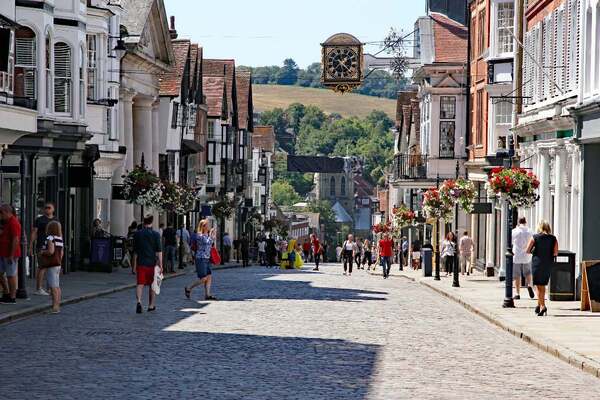
The small cells have been strategically placed in high-demand areas including the high street, around Guildford Castle and near Guildford Station, delivering enhanced mobile connectivity for O2 customers while maintaining the city centre’s historic charm.
“Better digital infrastructure means stronger local economies, more resilient communities, and a Surrey that thrives both today and tomorrow”
“We’re proud to be working with O2 and Freshwave to enhance mobile connectivity in Guildford, supporting our Digital Strategy and helping bring our high streets into the modern age,” said Matt Furniss, cabinet member for highways, transport and economic growth, Surrey County Council. “Better digital infrastructure means stronger local economies, more resilient communities, and a Surrey that thrives both today and tomorrow.”
By processing mobile traffic at street level, small cells help reduce pressure on the wider network. This allows more people to call, text and access data simultaneously, improving the overall mobile experience for O2 customers who visit, live and work in Guildford.
“This small cell deployment in Guildford is a great example of our £700 million Mobile Transformation Plan in action,” said Professor Robert Joyce, director of mobile access engineering, O2, said. “We’re bringing faster, more reliable connectivity to busy public spaces to meet record network demand.”
Neil Barnes, mobile network operator account director, Freshwave, said: “We’re making it easier for the network operators to deliver mobile coverage where it matters most. In Guildford, our open access agreement with Surrey County Council, together with our partnership with O2, means faster rollout, less street clutter, and stronger connectivity for the community. It’s a smart, efficient way to support local needs while keeping the city’s character intact.”
Open access agreements allow local authorities to retain control of their street assets while working with different mobile network operators (MNOs) and neutral hosts such as Freshwave.
Freshwave has deployed more than 800 outdoor small cells across the UK on behalf of the MNOs who want to boost community connectivity for their customers. Their managed sites in the UK include several central London boroughs and Docklands.
Why not try these links to see what our SmartCitiesWorld AI can tell you.
(Please note this is an experimental service)
How do outdoor small cells improve mobile connectivity in urban areas?What benefits do open access agreements provide to local authorities?How does processing mobile traffic at street level reduce network pressure?In what ways does Freshwave's deployment support O2's transformation plan?How are small cells installed without impacting historic city centre aesthetics?