





 22-26 June 2026: Find out more
BUILD YOUR OWN
RESOURCE LIBRARY



Podcasts
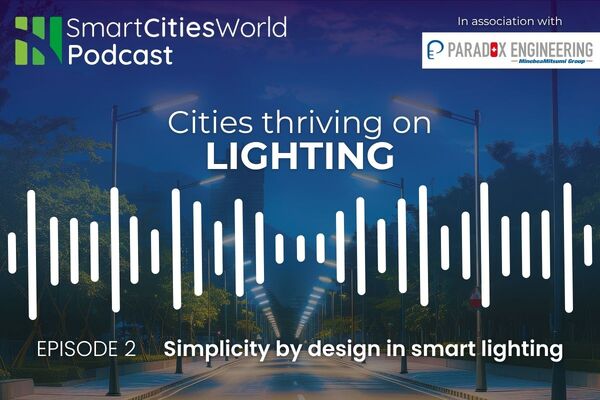
Cities Thriving on Lighting, Episode 2 – Simplicity by design in smart lightingSponsored by Paradox Engineering
Cities Thriving on Lighting, Episode 1 – Lighting as the backbone of the smart citySponsored by Paradox Engineering
Opinions

Transforming indoor public safety with smart sensor networksSponsored by Motorola Solutions
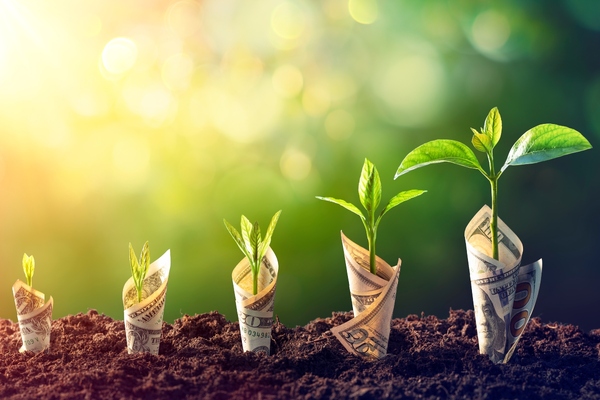
Green urban infrastructure spend to reach $978bn by 2030
ABI Research said the single most important benefit of green urban infrastructure is its role in making cities more resilient against climate change impacts.


Global public and private investment levels in green urban infrastructure are expected to increase from $606bn in 2022 to $978bn in 2030 across a wide range of green assets, according to new research.
The extent of this includes city parks, urban forests, blue spaces such as ponds and lakes, rooftop gardens, green walls and buildings, and pedestrianised green streets as part of new urban concepts.
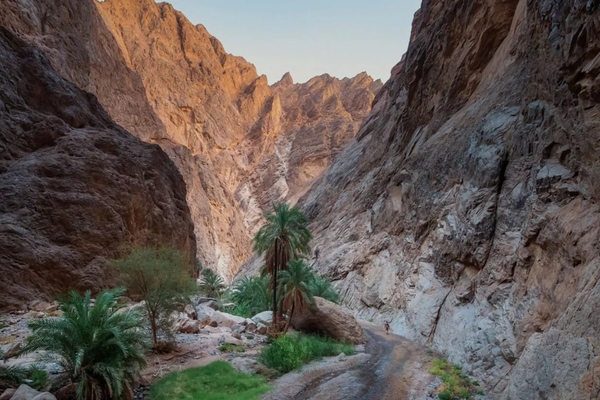
Neom Regreening
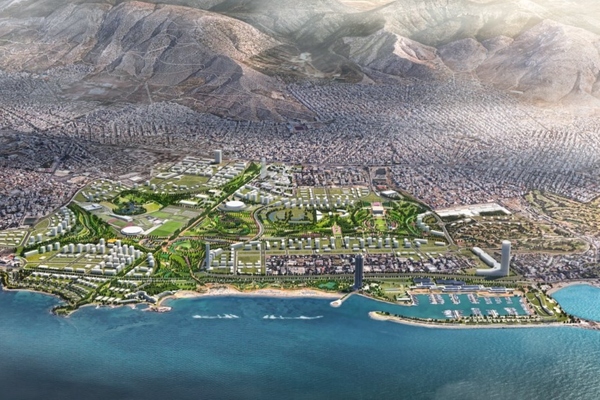
Example projects from global technology intelligence firm ABI Research’s Green Urban Infrastructure report are the green makeover of the Champs Élysées in Paris for the 2024 Olympics (€250m); the redevelopment of the former Athens International Airport into the Metropolitan Park and Coastal Front (€8bn); and the Neom Regreening and Saudi Green Initiatives ($187bn).
Other examples include Madrid’s Nuevo Norte Urban Forest, Melbourne’s Green Infrastructure Plan, Bangkok’s Benchakitti Forest Park (covering an area of 0.7km2), and Boston’s Green New Deal.
“Green infrastructure offers the combined advantage of functioning as natural reservoirs for excess stormwater and excessive heat due to its innate water absorption and heat storage capabilities”
“The single most important benefit of green urban infrastructure is its role in making cities more resilient. Resilient against the impact of climate change in terms of mitigating the effects of flooding, heat islands, drought, and other natural disasters on urban living,” said Dominique Bonte, VP end markets and verticals at ABI Research.
“Green infrastructure offers the combined advantage of functioning as natural reservoirs for excess stormwater and excessive heat due to its innate water absorption and heat storage capabilities. Both substantially reduce flooding of vulnerable inhabited areas and the number and severity of heat islands.”
Read More
However, the report finds green urban infrastructure offers many additional benefits:
- a key tool for urban decarbonisation, contribution to net zero cities, and achieving urban circularity
- improved air quality and reduced noise pollution
- increased urban biodiversity – “bringing nature back to cities”
- improved urban living quality, health, and mental wellbeing
- positive impact on economic development.
From a technology perspective, digital twins are the ultimate tool for city governments and developers to design, model, plan, simulate, and manage green urban infrastructure.
Detailed information about trees and other green assets can be captured through ground-based and airborne lidar sensor scanning systems often complemented by satellite imagery. Artificial Intelligence (AI)-based recognition capabilities allow building complex models featuring various metrics, including predictive data about expected tree lifetimes.
“The single most important benefit of green urban infrastructure is its role in making cities more resilient”
Digital twin modelling and simulation use cases include the identification of current and future heat islands, the assessment of vulnerable populations, the percentage of permeable surface and vegetation levels, the water retention potential of green rooftops, detailed tree analytics, and water run-off and carbon storage metrics.
Urban digital twin solutions are offered by vendors like Siradel (Engie) and Dassault Systèmes, Singapore-based Greehill develops digital twin technology exclusively optimised for green infrastructure.
ABI Research’s Green Urban Infrastructure report is part of the company’s Smart Urban Infrastructure research service, which includes research, data, and analyst insights.
Why not try these links to see what our SmartCitiesWorld AI can tell you.
(Please note this is an experimental service)
How does green urban infrastructure improve city resilience against climate change?What role do digital twins play in planning green urban infrastructure?How can green infrastructure contribute to urban decarbonisation and net zero goals?What technologies enable detailed monitoring of urban green assets like trees?How do green spaces reduce urban heat islands and manage stormwater runoff?ABI ResearchAthensBangkokBostonclimate actionConnectivity & Datadigital twinsEnergy & EnvironmentMellbourneNeomParks and green spacePedestrianisationRecreational spaceurban space

Latest City Profile
Latest Urban Exchange Podcast
Latest Special Report
SmartCitiesWorld Newsletters (Daily/Weekly)
You may also like these related articles...
BECOME A MEMBER
© 2026 SmartCitiesWorld
Smart Cities World Ltd, 37 Lombard Street, London, EC3V 9BQ