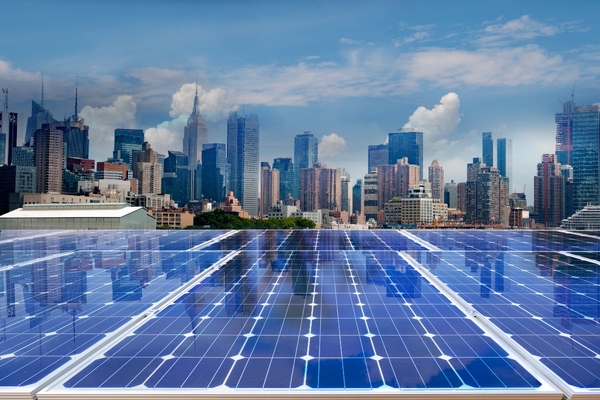




The solar campaign has begun enrolling 1,700 units to an estimated 5,000 residents from seven properties across The Bronx, Brooklyn, Queens, and Manhattan.
A campaign to enrol thousands of low-and moderate-income residents across New York City in community solar programmes has been launched to help them realise substantial discounts on their electricity bills.
To this end, Perch Energy, a clean energy technology platform and community solar servicer, and Nuveen, one of the largest owners of affordable housing in the US, have partnered to pioneer a strategy to bring community solar to these households at scale.
In October 2023 the Private Equity Impact team at Nuveen, a $1.1tn asset manager of TIAA, committed $30m in Series B equity to Perch and since investment, has worked closely with both Nuveen’s affordable housing team and Perch.
The campaign has begun enrolling 1,700 units to an estimated 5,000 residents from seven properties across The Bronx, Brooklyn, Queens, and Manhattan, through special events and lease renewals. Nuveen owns and maintains more than 15,000 affordable housing units in NYC alone.
According to Nuveen, this partnership underscores its commitment to sustainability and enhancing the living standards of its residents, who can expect up to 20 per cent savings on their monthly electricity bills after signup.
“Community solar is making good on the promise that solar can benefit everyone, including renters and not just those with the resources to install solar panels on their roof”
The initiative will also mean that cost savings from community spaces can be re-invested in additional environmental performance projects across Nuveen’s affordable housing portfolio, such as LED lighting replacements and low flow fixtures.
“We are excited to bring community solar and meaningful savings to Nuveen’s affordable housing residents in NYC. Our investment in Perch is emblematic of our focus on investing in companies that can leverage the broader Nuveen platform to drive an equitable transition to a low-carbon economy,” said Radhika Shroff, managing director at Nuveen PE Impact.
She continued: "This initiative not only elevates the lives of residents at our affordable housing developments, but will enhance the breadth of sustainability initiatives across the investment portfolio.”
Perch reports its new community solar capacity under management has increased by 133 per cent since 2021 in New York alone, with the company currently managing more than 150 solar farms nationwide. Perch claims each MW of capacity it manages in New York is enough to subscribe 280 average households.
"This initiative not only elevates the lives of residents at our affordable housing developments, but will enhance the breadth of sustainability initiatives across the investment portfolio”
The New York campaign is the first step in bringing lower electric bills to affordable housing residents and renters in every state with a community solar market.
“We’re incredibly excited to partner with Nuveen to deliver thousands of New Yorkers access to significant cost savings on a major expense like their electricity bill,” said Bruce Stewart, CEO of Perch Energy. “This effort will bring at least one bill down for working families, especially at a time when the cost of everything else is rising. Community solar is making good on the promise that solar can benefit everyone, including renters and not just those with the resources to install solar panels on their roof.”
Boston-based Perch Energy is an industry-leading community solar servicer that claims to have helped renters, homeowners, and businesses save nearly $30m cumulatively in total energy discounts since its founding in 2021.
Why not try these links to see what our SmartCitiesWorld AI can tell you.
(Please note this is an experimental service)
How does community solar reduce electricity bills for affordable housing residents?What role does Nuveen play in expanding community solar in NYC?How can savings from community solar fund other sustainability projects?What is Perch Energy’s strategy for scaling community solar access?How many households can one megawatt of solar capacity support in New York?