














 22 - 26 June 2026: Find out more




BUILD YOUR OWN
RESOURCE LIBRARY



Masdar City collaborates on 24-7 clean energy project
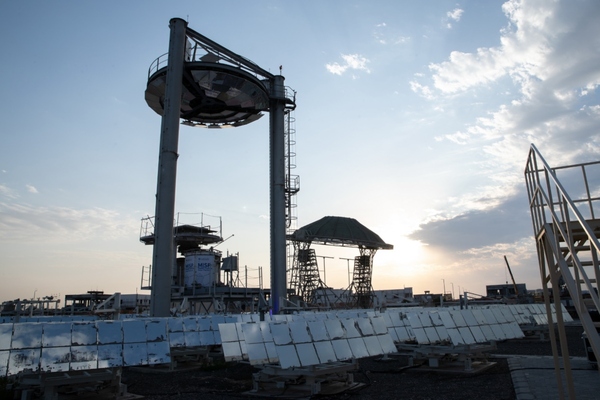
The system will undergo extensive testing and demonstration at the Masdar Institute Solar Platform in a desert environment that provides ideal solar conditions.


Masdar City in Abu Dhabi is the location for a thermal energy storage-power project to deliver affordable and continuous clean energy.
The distributed and scalable Thermal Energy Storage-Power on Demand (TES.POD) system will be run by Swedish energy storage company Azelio, Khalifa University of Science and Technology, and Masdar, as part of a three-party research and development agreement.
Solar energy
The Azelio storage system is used with solar photovoltaic (PV) panels and enables renewable and cost-efficient electricity 24 hours a day, seven days a week.
The system will undergo extensive testing and demonstration at the Masdar Institute Solar Platform (MISP) in a desert environment that provides ideal solar conditions to generate full daily cycles of clean energy in combination with solar PV.
Over the next 12 months, Khalifa University researchers will continuously operate Azelio’s electrical thermal energy storage system, collecting and analysing the data, while conducting an independent validation of the system. At the end of the year, Khalifa University will provide a report on the system’s performance in the desert environment.
“Developing technologies that both protect and guarantee a constant, secure, and affordable source of electricity is extremely important and this project is set to bring us closer to that goal”
“Masdar City is committed to facilitating R&D projects that bring ground-breaking new technologies to the market and positively contribute to regional and global energy security,” said Abdulla Balalaa, executive director, Masdar City.
“Azelio’s TES.POD system is another excellent example of what collaboration and innovation can achieve. Developing technologies that both protect and guarantee a constant, secure, and affordable source of electricity is extremely important and this project is set to bring us closer to that goal.”
Read More
The system’s storage units will be demonstrated and evaluated on several criteria, including supplying renewable electricity round-the-clock to a system for atmospheric water generation that captures humidity and condensates it to usable water.
Azelio’s energy storage TES.POD stores energy as heat in a metal alloy made from recycled aluminum and silicon. The heat from the storage is transferred to a Stirling engine that enables supply of electricity and usable heat on-demand at all hours of the day, without emissions and at an affordable price. The system is scalable and competitive from 0.1 to 100 MWe.
Khalifa University’s MISP at Masdar City offers a resource to equipment manufacturers, system integrators and installers, project developers, utility companies, investors, private end users, research organisations, and the public.
Why not try these links to see what our SmartCitiesWorld AI can tell you.
(Please note this is an experimental service)
How does Azelio’s TES.POD system store and convert thermal energy?What advantages does the desert environment provide for solar testing?How will Khalifa University validate the TES.POD system’s performance?In what ways can TES.POD support continuous renewable electricity supply?How does the Stirling engine contribute to on-demand electricity generation?AzelioClimate change/ResilienceEnergy & EnvironmentKhalifa UniversityMasdarMasdar Citysmart gridssolar power

Latest City Profile
Latest Urban Exchange Podcast
Latest Special Report
SmartCitiesWorld Newsletters (Daily/Weekly)
You may also like these related articles...
BECOME A MEMBER
© 2026 SmartCitiesWorld
Smart Cities World Ltd, 27 Clements Lane, London, EC4N 7AE