
Savings were achieved in the first stage of its net-zero strategy, which included installation of LED lighting in all buildings and upgrades to building systems.
The University of East London (UEL) has reduced its carbon emissions by 10 per cent from its 2020-21 baseline in phase one of its new net zero strategy.
UEL is aiming to reach a net-zero by 2030 and is partnering with Siemens to develop and deliver the strategy, designed to improve energy efficiency and renewable integration.
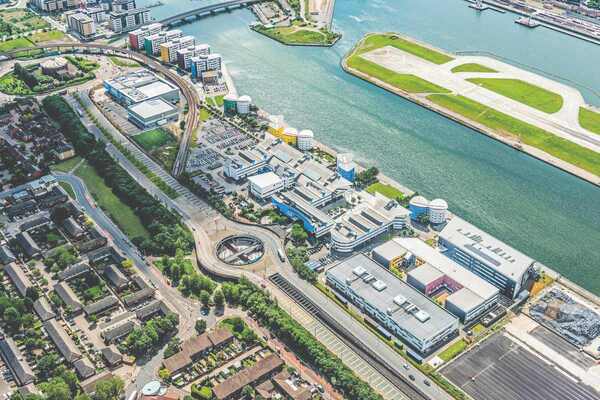
The strategy includes a roadmap to reduce carbon emissions across the university’s campuses in the London Docklands and Stratford, which are home to 25,000 students.
The first major step towards the reduction of energy consumption on campus was through the installation of LED lighting in all buildings and upgrades to all building management system controllers.
“Our long-term partnership with Siemens is central to our commitment to becoming a national decarbonisation leader, and providing a global blueprint for urban sustainability”
As part of the second phase, Siemens is installing technologies across the university’s campuses which will help it to decarbonise its energy consumption. This includes the installation of approximately 2MW of solar photovoltaics (PV), which is estimated to generate 1.2 GWh of zero carbon electricity a year, and the installation of 27 electric charging points at the university’s Docklands Campus, which will go live in the next month.
Siemens will also support UEL in creating a living lab to embed sustainability across the university’s course curricula and provide real-time data allowing students to develop the skills they need to succeed in a green economy.
“Our long-term partnership with Siemens is central to our commitment to becoming a national decarbonisation leader, and providing a global blueprint for urban sustainability,” said Professor Amanda Broderick, vice chancellor and president, University of East London. “We have already delivered significant carbon reduction savings and reduced both our emissions and energy consumption more than any other modern university in London, thanks to state-of-the-art energy generation technology.
“And, importantly, our Living Lab will provide our students, researchers and local businesses an inclusive place to test, research and commercialise green technology in a real-world environment, with access to the latest developments in smart technology to empower our students to become sustainability leaders of the future.”
UEL reckons that 90 per cent of its zero carbon energy will be consumed across the university’s campuses, with the remainder exported to the National Grid.
“Our partnership with UEL will support the university in meeting its net zero targets, providing a structured roadmap to cut carbon emissions across both campuses,” said Simon Burgess, head of solutions, energy performance services at Siemens in the UK and Ireland. “We’ve already made significant progress over the last 12 months and the next phase will focus on installing more new renewable energy assets on-site to support sustainable generation.
“True partnership and collaboration are key to this success, and that goes beyond decarbonisation. Achieving a net zero economy also depends on developing the right talent for the future, and we’re making the data from our work available to students to inform their studies and equip them with the knowledge and skills they will need to thrive in the green economy.”
Why not try these links to see what our SmartCitiesWorld AI can tell you.
(Please note this is an experimental service)
How does LED lighting installation contribute to reducing carbon emissions?What role do building management system upgrades play in energy efficiency?How will 2MW solar PV installation impact the university's energy consumption?In what ways does the Living Lab support sustainability education and research?How do electric vehicle charging points aid the university's net-zero goals?