










 22-26 June 2026: Find out more



BUILD YOUR OWN
RESOURCE LIBRARY



Bristol unveils plans for sustainable affordable housing
Working with Edaroth, the council is creating the homes based on a new model created under the city’s involvement in the UN Climate Smart Cities challenge.


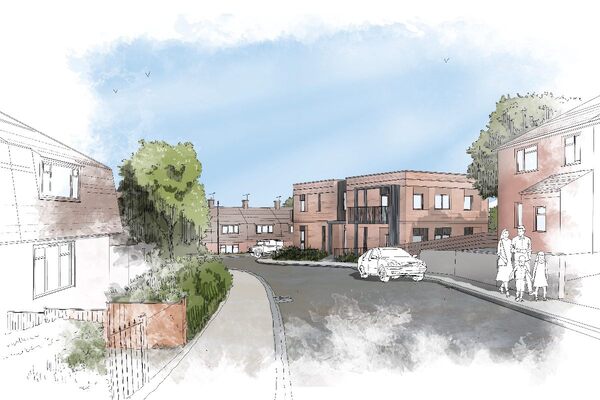
Bristol City Council has signed an agreement with sustainable housing developer Edaroth to design and deliver 29 affordable homes based on a new model created under the UK city’s involvement in the UN Climate Smart Cities challenge.
The new homes will be a mix of 13 houses and 16 apartments and will be constructed using offsite manufacturing methods to create low energy-use, net zero homes, which will provide additional capacity for the housing market and directly tackle the housing crisis.
Under-utilised and brownfield sites
Edaroth, which stands for “everyone deserves a roof over their head” is a wholly owned subsidiary of professional services firm AtkinsRéalis and provides end-to-end development solutions which focus on delivering social and affordable housing at the point of need.
Subject to planning approvals, the houses will be developed at six sites across Bristol (Claypiece Road, Dowling Road, Dutton Close, Newnham Close, Rye Close and Whitchurch Lane) on under-utilised land owned by the city council. This includes brownfield sites, which are often overlooked by large-scale housing developers, but can be adapted/repurposed to unlock new space for communities.
“This development of much needed affordable homes will add to the 12,500 new homes already completed in the city between 2016 and 2023”
“We are thrilled that our collaboration with the UN Habitat for the Climate Smart Cities Challenge is set to deliver 29 social rent zero carbon council homes,” said councillor Tom Renhard, cabinet member for housing delivery and homelessness at Bristol City Council.
“This development of much needed affordable homes will add to the 12,500 new homes already completed in the city between 2016 and 2023. The new homes will help people in housing need, adding to the 474 new affordable homes built in Bristol in 2021/22.
Read More
Central to the development agreement are the sustainable construction methods that are used by Edaroth including:
- The majority of the building parts are manufactured in a UK factory before being transported and assembled on-site
- The carbon impact of the development process is reduced and also ensures the homes will be delivered more quickly compared with traditional methods of construction
- There is minimal disruption to residents living near the development sites as a result
- The new homes will be built to EPC (Energy Performance Certificate) A+, the highest efficiency rating possible to keep energy usage and carbon emissions low.
Renhard added: “This wider collaboration is not just about the great homes that will be built, but it is helping us unlock small parcels of underutilised council land that have often been considered too complex or expensive to develop for council housing.
“We remain ambitious to see even more affordable housing built in our city and this new approach to unlock these small brownfield sites will help us do that whilst also protecting our vital green spaces.”
Mark Powell, managing director at Edaroth (an acronym for Everyone Deserves a Roof Over Their Head), added: “Entering into a development agreement with Bristol City Council underlines their position as a forward-thinking local authority which places value in sustainable housing and infrastructure.
“Bristol, in common with the rest of the country, faces a huge demand for affordable homes. This scheme is one part of the solution which not only supports the ambition to meet that demand, but also aims to enhance communities by transforming under-used sites to create thriving places to live.
“The agreement is a really important step in this project which demonstrates the city council’s confidence in the proposals we’ve put forward and their determination to deliver low carbon, low-energy-use homes for the community.”
The agreement is based on an award-winning approach developed by the city council, and the One City team, with partners including the Housing Festival, AtkinsRéalis and Edaroth, as one of four winning projects in the UN Habitat Climate Smart Cities Challenge in 2022.
Part of the challenge involved the creation of a demonstrator scheme that could prove how aggregating small sites for development, and overcoming systemic barriers, could unlock previously unviable sites to deliver truly affordable social housing.
“Winning the UN Smart Cities Challenge as the Bristol Thriving Places team enabled us to explore viable sites for development and devise this approach around them”
The new approach identifies small parcels of land for development such as brownfield or under-used garage sites, within existing residential areas, which is more effective in creating social value and cohesion as it enables those existing communities to thrive.
Zoe Metcalfe, client director for Connected Thriving Places, AtkinsRéalis who led on the competition application process for AtkinsRéalis, said: “Winning the UN Smart Cities Challenge as the Bristol Thriving Places team enabled us to explore viable sites for development and devise this approach around them.
“The wisdom of the Edaroth development team has been instrumental in translating theory into reality. The Housing Festival boldly led the systems-led change to disrupt the evaluation model to deliver social value with Bristol City Council facilitating innovation. An exemplar of the power of collective action through trusted partnerships.
“It really shows how the principle of aggregating and clustering sites in this way can help to unlock value and achieve the economies of scale that are central to the offsite manufacturing approach which Edaroth delivers, and we’re thrilled that Bristol City Council has chosen to turn those potential benefits into a reality through this new development agreement.”
Public engagement process
A public engagement process has been launched, with information packs and questionnaires issued to residents near to the development sites to provide feedback.
The development agreement with Bristol City Council follows the recent announcement that Edaroth has been given the green light to provide sustainable homes in Surrey, after Raven Housing Trust was granted planning permission for its latest housing scheme.
The Climate Smart Cities Challenge is a city-based open innovation competition led by UN-Habitat, Viable Cities and other partners that invited technologists, businesses, and investors to develop, test and scale cutting-edge solutions in four cities to reduce greenhouse gas emissions.
Why not try these links to see what our SmartCitiesWorld AI can tell you.
(Please note this is an experimental service)
How does offsite manufacturing reduce carbon emissions in housing construction?What benefits do brownfield sites offer for affordable housing development?How does EPC A+ rating improve energy efficiency in new homes?In what ways does clustering small sites unlock affordable housing potential?How does public engagement influence planning for sustainable housing projects?
Latest City Profile
Latest Urban Exchange Podcast
Latest Special Report
SmartCitiesWorld Newsletters (Daily/Weekly)
You may also like these related articles...
BECOME A MEMBER
© 2026 SmartCitiesWorld
Smart Cities World Ltd, 27 Clements Lane, London, EC4N 7AE