










































Discover how AI-powered digital twins are transforming urban infrastructure and how these innovations can improve efficiency, resilience, and sustainability.
Explore how data and AI is being used in urban transport networks to support planning, day-to-day operations, and improve outcomes for communities and passengers.
As cities confront the combined pressures of climate change, infrastructure resilience and digital transformation, the SmartCitiesWorld Summit 2026 will bring together urban leaders and partners during London Climate Action Week to explore how these agendas intersect – and how cities can translate strategy into practical action.
Find out how Sunderland is repositioning itself as a leading smart city – using digital infrastructure and low-carbon innovation to build a resilient, future-focused economy in the latest SmartCitiesWorld City Profile.
Find out how Dublin is innovating to improve experiences and services for its communities in the latest SmartCitiesWorld City Profile, including digital twin projects, traffic reduction, and economic growth.
Tune into the SmartCitiesWorld podcast to understand the world of sovereign AI for cities, featuring PNY Technologies’ Youssef Nadiri as our expert guest.
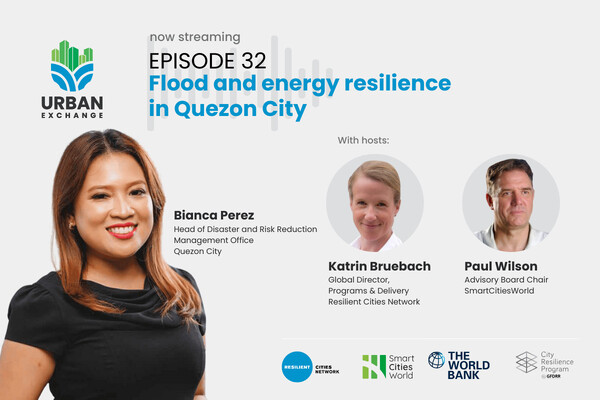
Tune in for the latest Urban Exchange where we get a first-hand account of city resilience measures from Quezon City following unexpected extreme rainfall.
How smart sensor networks can help improve indoor safety by detecting risks early, improving situational awareness and supporting healthier, more secure and sustainable buildings.
Gareth Tang, President of Urban Solutions at ST Engineering, explains how urban AI applications are set to evolve, detailing projects where AI is already making significant impact.
The first update in five years came just ahead of the start of San Francisco Climate Week, which will bring together more than 60,000 people for 700 events.
A report from C40 Cities explains how cities can develop investable project pipelines, reduce risk, and mobilise private finance for climate adaptation.
It comprises 50-plus actions creating a path for the City to reach carbon neutrality by 2045, double local solar production and install 120,000 EV chargers.
The initiative from Innovate Memphis aims to increase equitable access to trusted regional data for governments, nonprofits, researchers, and residents.
The cities summit, organised by Bloomberg Philanthropies and the Aspen Institute, will convene more than 1,000 mayors, policymakers, innovators, and creatives.
Oana Taut, co-founder and CPO of infrared.city, explains how AI, data and simulation are helping cities move beyond long-term climate ambitions towards immediate, measurable action.
Explore what early-stage AI cities can learn about governance, high-impact risk tiers, and building the trust infrastructure needed to scale safely from South Korea’s AI Basic Act.
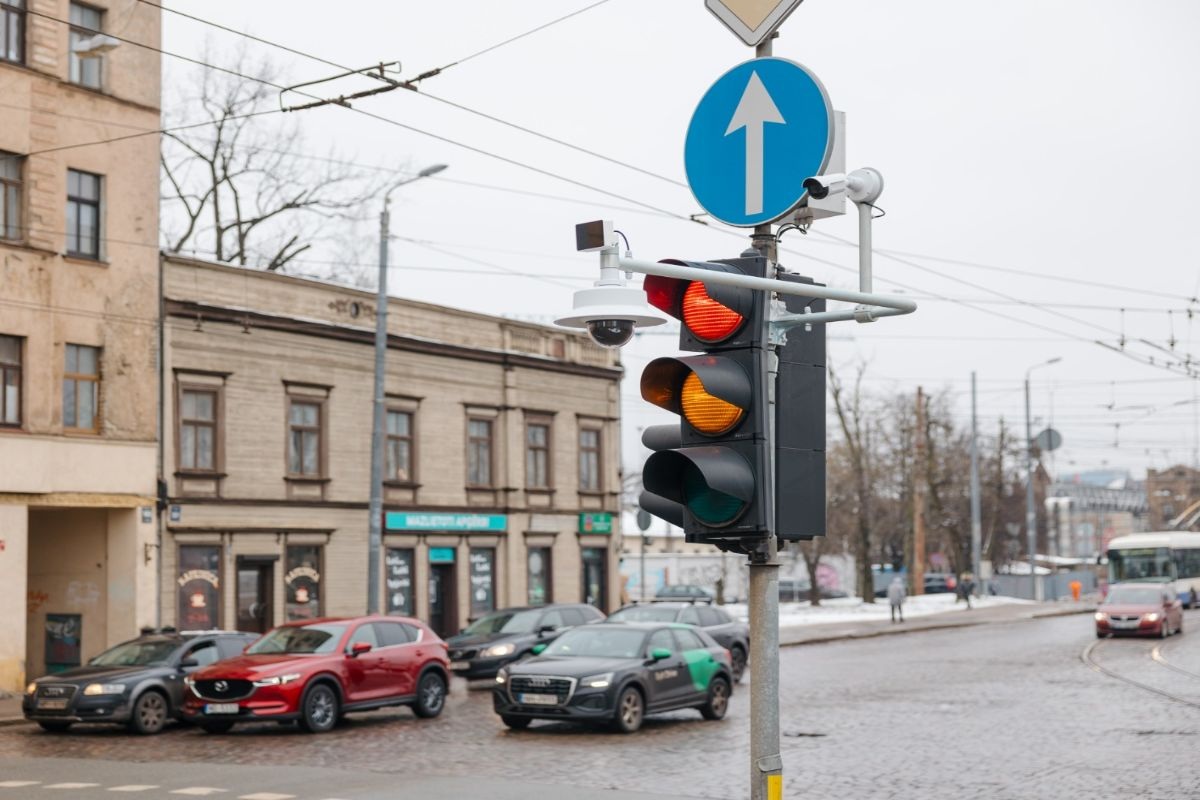
The reduction over the past six months follows installation of LMT Group’s smart traffic monitoring solution in nine locations across the Latvian capital.
Transparency, infrastructure and public trust are key to urban success, according to the annual ranking, published by the IMD World Competitiveness Centre.
Report from GCoM and C40 Cities shows how the EU’s know-how to engage with cities and regions to support climate delivery reflects global Champ good practices.
Sacramento City and County is working with experts from the Urban Land Institute to explore ways to put the City’s heat‑reduction strategies into action.
The City and Tucson Electric Power have reached a milestone with the development of a proposed Energy Collaboration Agreement, which is ready for public review.
Planned solutions include introduction of low emission zones, development of park and ride parking lots and transition to electric shared cars and taxis.
As cities confront the combined pressures of climate change, infrastructure resilience and digital transformation, the SmartCitiesWorld Summit 2026 will bring together urban leaders and partners during London Climate Action Week to explore how these agendas intersect – and how cities can translate strategy into practical action.
The app serves as a centralised digital hub, offering quick access to City government information, including news, community events, and social media updates.
The City Council reports that increased awareness continues to make a measurable difference in keeping residents and communities safe during extreme heat.
City-led decarbonisation initiative takes an equity-focused approach, providing both electrification and health and safety upgrades to low-income homeowners.
Delivered in partnership with InnovateUS, the self-paced training will equip the District’s workforce to use generative AI tools safely and effectively.
Research from Euna Solutions shows that while most public sector agencies are exploring AI, measurable value today is concentrated in operational workflows.
Malaysian capital worked with C40 Cities and the UK on a four-year initiative to integrate inclusive, practical climate action into planning and operations.
Strategy follows a public consultation and aims to help households save money, improve neighbourhoods and support long‑term health and resilience of the UK city.
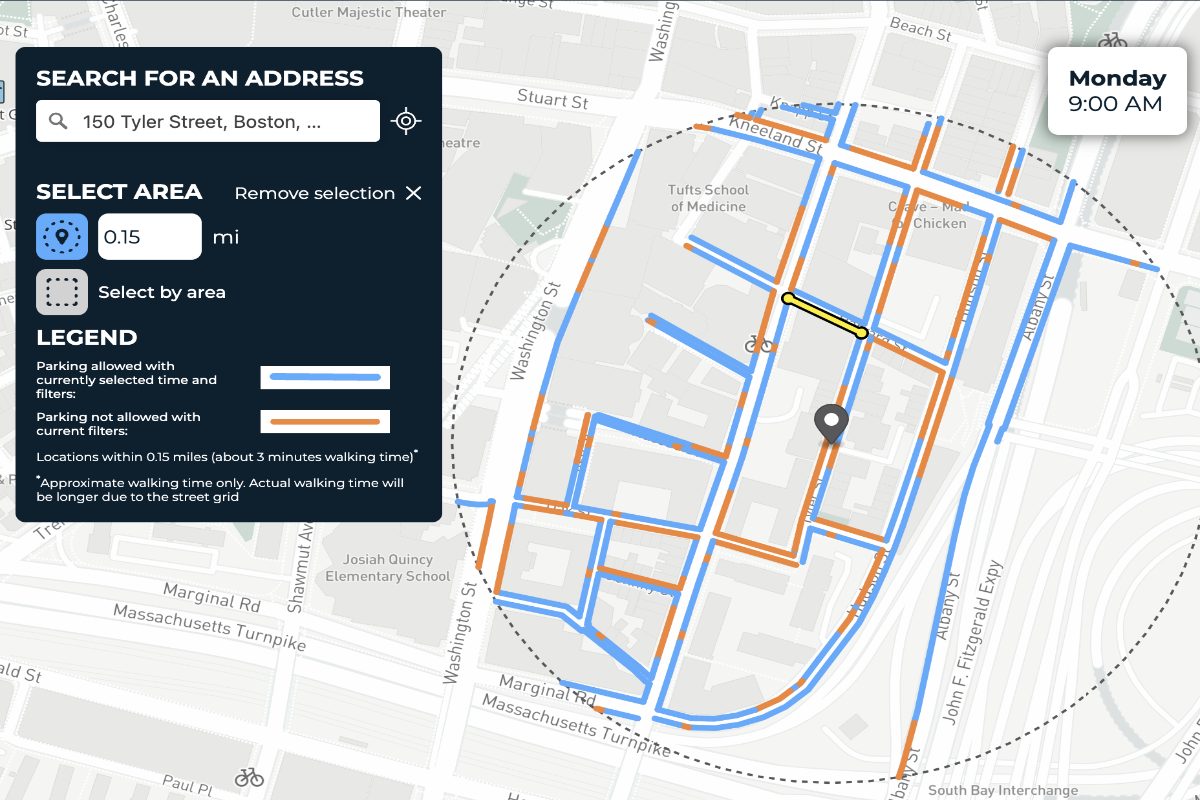
Office of Emerging Technology and city partners launch the Curb Lab, aiming to dynamically manage parking and kerb space, reducing congestion in Boston.
From data foundations and ethical guardrails to workforce skills and citizen trust, the challenge is no longer whether to use AI in cities – but how to embed it in ways that are practical, human-centred, and built to last.
The standardised Local Authority Common Ask builds on previous cross-sector collaboration and enables local authorities to share granular spatial forecasts.
Pilot projects in the latest Leading Cities’ AcceliGOV programme enable cities to launch proven climate and infrastructure solutions in approximately 90 days.
SmartCitiesWorld’s senior editor Luke Antoniou on the launch of the new AI CityXchange, at a time where dialogue and knowledge sharing is critical between cities and their partners to use AI technology for public good.
A dedicated platform and series of workshop events focused on how AI is being applied across cities from experimentation to large-scale, embedded deployment.
Renewed framework will guide the City’s work in embedding health and social sustainability across planning, programmes, services and infrastructure delivery.
The G7 Urban7 group will provide a platform for political dialogue and defining joint positions of local and regional governments on relevant G7 priorities.
C40 Cities and Development Bank of Latin America and the Caribbean are joining forces to unlock climate finance and fast-track city-led adaptation projects.
Discover how Microsoft is working to help cities ease pressure on resource and budget with AI, from helping to reshape government processes to helping transform resident experiences.
The Model AI Governance Framework for Agentic AI provides guidance on how to deploy agents responsibly, recommending technical and non-technical measures.
The newly selected regions in Europe will receive funding and access to tailored tools and guidance, interactive peer learning, mentoring, and expert guidance.
The latest Global South City Competitiveness Index shows Global South cities are no longer catching up but reshaping the geography of global competitiveness.
Europe must take advantage of brownfield development’s potential to address affordable housing needs and reduce carbon emissions, a new report reveals.
Bloomberg Philanthropies’ What Works Cities has recognised 13 new cities in its data excellence programme while 19 have further elevated their data practices.
It requires developers to explore all reasonable options for retrofitting and adapting buildings before seeking permission for demolition and redevelopment.
The latest Cities A List and the States and Regions A List from CDP demonstrates the pivotal role cities play in shaping a resilient and earth-positive future.
The German capital’s Senate has more than €570m available, which it will use on a raft of measures to build a climate-resilient and liveable city in the future.
It will work with metro mayors and senior teams to strengthen strategic leadership, build high-performing teams and sharpen data-informed decision-making.
Policymakers and city leaders must act to unlock vital sources of private capital and cities must engage investors at a much earlier stage, says Delphine Queniart of Bankers Without Boundaries.
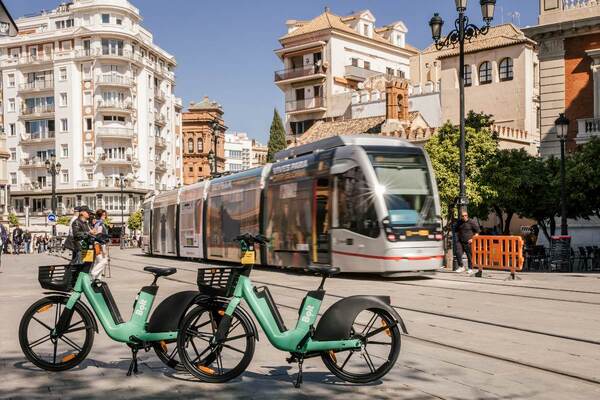
Preliminary report findings reveal how smarter rules in Hannover and visitor-led cycling in Seville are reshaping how Europeans move through their cities.
New York City has approved a package of legislation creating an Office of Algorithmic Accountability, new transparency requirements and citywide AI standards.
The plan, shaped by input from nearly 3,000 residents, introduces new safety measures, updated crash data and coordinated actions across city departments.
The Human Rights Campaign Foundation has released the 2025 Municipal Equality Index, revealing a record number of cities achieving top marks for inclusion.
Local and regional governments are calling for deeper national collaboration and clearer funding pathways following on from the COP30 negotiations in Belém.
Discover how Manchester is turning its digital ambitions into action through a people-centred approach that blends social purpose with technical innovation.
The ProUrbano programme helps cities across Latin America and the Caribbean better understand and transfer climate risks and finance adaptation measures.
Cop30 President André Corrêa do Lago highlighted the importance of adaptation and multilevel governance, while a report was launched on the inclusion of cities in new NDCs.
Mayor Matt Mahan explains how the city is responsibly deploying AI and leading the discussion on how cities can use it to improve civic engagement, public safety, transportation, and service delivery.
Initiative from Rockefeller Foundation and Centre for Civic Futures aims to help governments build capacity, confidence, and shared infrastructure to use AI responsibly.
Plan to accelerate multilevel governance launches at Cop30 in Belém and Brazil and Germany are announced as the first co-chairs of the Champ coalition.
The statement is the final outcome from the Local Leaders Forum in Rio and calls on national governments to strengthen partnerships with cities and regions.
More than 300 city leaders will attend the summit with the goal of moving from the era of climate negotiation to the decade of delivery, with cities taking the lead.
Report spotlights where business and policymakers are making progress on key interventions to cut carbon in buildings, providing a playbook ahead of Cop30 to inform policy.
Manchester’s Digital Strategy has launched a new Digitalisation Maturity Assessment to accelerate connected placemaking, strengthen digital governance and ensure inclusive growth.